
SBOE expands state influence over classrooms with book list approval, TEKS controversy, and curriculum decisions

Date Posted: 4/14/2026 | Author: Heather Sheffield
During the April 2026 meeting of the State Board of Education (SBOE), sessions went late into the night/early into the morning, featured heated discussions; a lot of public testimony, including from Rep. Nate Schatzline (R–Fort Worth) and Sen. Bob Hall (R–Edgewood); and votes with direct implications for Texas educators, particularly around curriculum, instructional materials and the educator workforce.
Board divided over Social Studies TEKS development
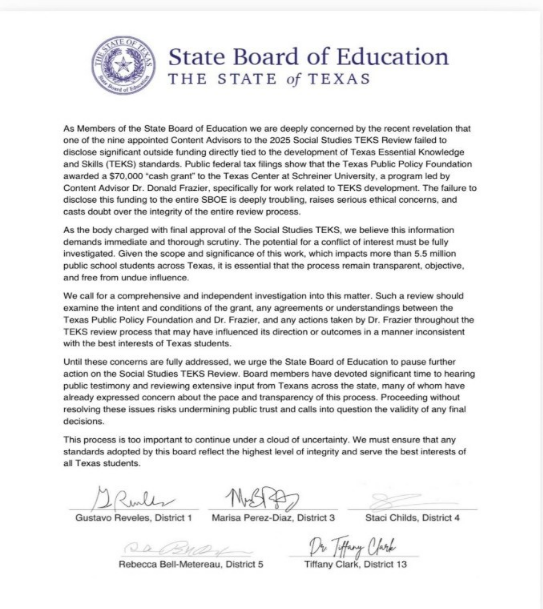
One of the most closely watched issues was continued debate over the development of the Social Studies TEKS and the role of outside contributors. Several SBOE members sent a formal letter raising concerns about the involvement of a Texas Public Policy Foundation (TPPF)-affiliated individual who was reportedly paid to assist in drafting portions of the standards. The letter questioned transparency, potential bias, and the broader precedent of outsourcing curriculum writing to politically affiliated groups.
Although the board did not take a final vote on the TEKS this month, members did take procedural action to continue moving draft standards forward, signaling the process will continue despite highly partisan rhetoric and ongoing controversy. This raises continued concerns about who is shaping classroom standards and how much credence is being given to educator input. A final SBOE vote on the Social Studies TEKS is expected in June or September.
Statewide list of literary works approved
A major action item this month was the board’s vote (8–7) to approve a controversial version of a statewide list of literary works required under recent legislation. The new list has an increased number of Bible verses after Chair Aaron Kinsey (R) asked for this Attorney General’s opinion on the issue in November 2025. The vote establishes an official, state-curated reading list intended to guide classroom instruction. However, discussion made clear the list is far from settled for some SBOE members. They raised concerns they are likely to continue raising about the scope of the list, the vetting process, and whether the list adequately reflects the diversity of Texas students. While adopted, the board signaled revisions to the list are likely, leaving educators with uncertainty about how the list will be implemented and how much flexibility districts and teachers will retain.
Actions on Bluebonnet Learning
Instructional materials remained a central focus, with the board taking additional actions tied to implementation of House Bill (HB) 1605 and continued oversight of Bluebonnet Learning materials. These votes reinforced the state’s role in reviewing and maintaining approved materials following earlier decisions requiring thousands of corrections. This underscores that state-approved materials, particularly those tied to additional funding and teacher preparation materials, will continue to play an increasingly prominent role in classrooms, even as questions about quality and accuracy persist.
Implementation steps approved for required educator civics training
The board also approved on a 10–5 vote continued implementation steps for the required civics training program for teachers and administrators, confirming the program will move forward through Education Service Centers. While already largely decided, these actions further solidify expectations for districts, including compliance requirements, despite the absence of dedicated funding for stipends.
No action taken on SBEC-adopted rules
In addition, the SBOE voted unanimously to take no action on the SBEC-adopted rules on the board agenda, allowing these rules to go into effect as scheduled. A “no action” vote might sound insignificant, but it’s actually what allows SBEC rules, often related to certification, assignment flexibility, and preparation pathways, to move forward as adopted rules, allowing changes to certification and educator preparation systems to take effect as scheduled.
In brief remarks that we reported on last week, Commissioner of Education Mike Morath addressed teacher preparation, recruitment, and retention, noting the state continues to hire large numbers of new teachers while relying increasingly on alternatively certified and uncertified educators. He also acknowledged that attrition remains elevated compared to prepandemic levels, pointing to ongoing workforce challenges that continue to affect classrooms.
Key takeaway from the April 2026 SBOE meeting
Taken together, this meeting’s actions reinforced a broader trend that educators are increasingly feeling in their day-to-day work: The state is expanding its role in shaping what is taught, what materials are used, and who is teaching. From the TEKS development process to the adoption of a statewide reading list and continued oversight of instructional materials and educator preparation pathways, decisions that were once largely local are increasingly being made at the state level. These shifts raise important questions about professional autonomy, local control, and the growing influence of state policy on classroom practice. The SBOE will meet next June 22–26 in Austin.
CONVERSATION
RECOMMENDED FOR YOU
08/21/2026
Teach the Vote’s Week in Review: Aug. 21, 2026
Public education continues to dominate conversations on the campaign trail, with candidates turning their attention to library books and “administrative bloat.” Plus: House Pensions Committee holds interim hearing on TRS.
08/21/2026
On the Campaign Trail: Aug. 21, 2026
Abbott and Hinojosa both spent much of their airtime this week on public education issues, including a call from the governor to audit school districts.
08/21/2026
Analysis: A tale of two audits
An audit finds “administrative bloat” at TEA—but the governor turns his attention to his perception of the same issue in school districts.